
 Alle Meldungen
Runter blättern in die Vergangenheit ... Bis heute (15.11.2025 BP) konnte man hier noch das alte Format ansehen. Ist nach so vielen Jahren nun doch obsolet, und reingeschaut hat ja auch keiner mehr. Außerdem sind ja alle Beiträge von damals hierhin umgezogen ... )
 cas
cas
Mecrisp-Stellaris auf PSoC 4/5
Klaus Zobawa hat in Zusammenarbeit mit Matthias Koch das Mecrisp Stellaris Forth auf Controller der Cypress PSOC 4/5 Serie portiert. Unter https://sourceforge.net/projects/mecrisp/files/Cypress könnt ihr die Downloads für die bisher fünf portierten PSoC’s finden:
- PSoC 4: cy8c4245, cy8c4247, cy8c4248
- PSoC 5: cy8c5868, cy8c5888
Eine Portierung auf PSoC 6 ist in Arbeit.
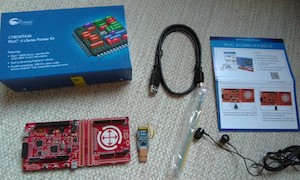
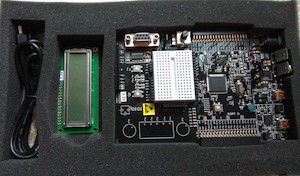
Wer Mecrips-Stellaris unverbindlich testen möchte findet drei verschiedene PSoC 4/5 Boards im Mikrocoontroler-Verleih der Forth-Gesellschaft
Cypress betreibt eine Community-Plattform auf der die Portierungen bekannt gemacht wurden. Unter PSoC 4 oder PSoC 5 findet ihr sie durch runterscrollen tief in den Stack oder durch Suche nach “Forth”.
Falls ihr Fragen allgemeiner oder technischer Art zu den einzelnen Portierungen habt könnt ihr sie gerne über die Community stellen mit dem kleinen Nebeneffekt, dass auf den Eintrag ein PICK ausgeführt wird und auf dem TOS landet und damit wieder in Erscheinung tritt.
 mk
mk
Mecrisp-Quintus 0.9 auf PIC32MX
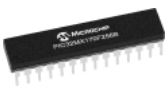 Matthias Koch unterstützt eine neue Architektur: Mit Mecrisp-Quintus 0.9 ist soeben seine erste Portierung für einen PIC32MX mit MIPS M4K-Kern erschienen. Jetzt ist der Weg frei für weitere Portierungen: In der Familie gibt es sehr starke Microcontroller im gut lötbaren DIP-Gehäuse wie den PIC32MX170F256B oder PIC32MX270F256B, was demnächst ordentlich Schwung in Projekte auf Lochraster bringen sollte. Rückmeldung erwünscht !
Matthias: "Vielen Dank an Klaus Kohl-Schöpe für das PIC32MX1/2/5 Starter Kit mit einem PIC32MX570F512L und an Paul Boddie, der mich mit Hinweisen für die Eroberung der Architektur versorgte."
Matthias Koch unterstützt eine neue Architektur: Mit Mecrisp-Quintus 0.9 ist soeben seine erste Portierung für einen PIC32MX mit MIPS M4K-Kern erschienen. Jetzt ist der Weg frei für weitere Portierungen: In der Familie gibt es sehr starke Microcontroller im gut lötbaren DIP-Gehäuse wie den PIC32MX170F256B oder PIC32MX270F256B, was demnächst ordentlich Schwung in Projekte auf Lochraster bringen sollte. Rückmeldung erwünscht !
Matthias: "Vielen Dank an Klaus Kohl-Schöpe für das PIC32MX1/2/5 Starter Kit mit einem PIC32MX570F512L und an Paul Boddie, der mich mit Hinweisen für die Eroberung der Architektur versorgte."
mk
The Forth Bookshelf Sept 2018
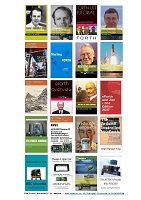 Juergen hat 5 Jahre Arbeit erfolgreich abgeschlossen. Hier der Ueberblick als A4 zum ausdrucken oder auch als PDF mit embedded Links. 19 Buecher als eBook verfuegbar, einige jetzt auch in Print, Nummer 20 fast fertig. Nur drauf klicken und man ist da.
https://wiki.forth-ev.de/doku.php/projects:litlist?s[]=the&s[]=forth&s[]=bookshelf&s[]=sept&s[]=2018#juergen_pintaske_sammlung
Juergen hat 5 Jahre Arbeit erfolgreich abgeschlossen. Hier der Ueberblick als A4 zum ausdrucken oder auch als PDF mit embedded Links. 19 Buecher als eBook verfuegbar, einige jetzt auch in Print, Nummer 20 fast fertig. Nur drauf klicken und man ist da.
https://wiki.forth-ev.de/doku.php/projects:litlist?s[]=the&s[]=forth&s[]=bookshelf&s[]=sept&s[]=2018#juergen_pintaske_sammlung
mk
NEU in Pintaske's Forth Book Shelf
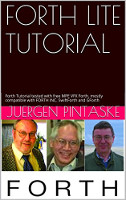 Jürgen Pintaske überzeugte weitere Forth-Autoren davon ihre Werke nicht einfach so untergehen zu lassen. So gibt es sie nun weiterhin zu kaufen, die guten alten Werke und Neue dazu, als eBook oder gedruckt:
https://www.amazon.co.uk/Juergen-Pintaske/e/B00N8HVEZM
Neu: FORTH LITE TUTORIAL: Forth Tutorial tested with free MPE VFX Forth, mostly compatible with FORTH INC. SwiftForth and GForth by [Pintaske, Juergen]. Da kann man viele Worte durcharbeiten und auch ein Spiel spielen. Es sollte auch mit dem runterladbaren VFXTESTAPP.exe gehen - ohne Installation.
Neu: Programming Forth, von Stephen Pelc. Für die, die tiefer einsteigen wollen in die Materie.
Neu aufgelegt auch Chen-Hanson Ting : Footsteps In An Empty Valley issue 3. Bei Amazon.
mk
MSP430FR2355 - interessante MCU mit integrierten OP-Amps und FRAM
1.8-V to 3.6-V operation, 16-Bit RISC architecture up to 24-MHz system clock and 8-MHz FRAM acces, 32KB of Program FRAM, 512 bytes of Information FRAM, and 4KB of RAM, 12-channel 12-bit ADC, Two enhanced comparator with integrated 6-bit DAC as reference voltage, Four Smart Analog Combo (SAC-L3), Three 16-bit timers with three capture/compare registers (Timer_B3), One 16-bit timer with seven capture/compare registers (Timer_B7), 32-bit hardware multiplier (MPY), 44 GPIOs. www.ti.com/fram
Da bin ich mal auf die Forths gespannt - die Launchpads dafür sind jedenfalls schon angekommen bei den Machern, und ich freue mich schon auf noForth, amForth und ein mecrisp für den chip.
mk
win32forth - neue website
 Peter 'Forth' hat seine website neu gemacht. Er hat ansehnlichen Beispiele, geschrieben mit win32forth und visualForth, dort zusammen getragen. So wie es aussieht, ist das für Open-Source-Forth auf Windows-Rechnern eine guter Anfang. Seht selbst: https://sites.google.com/view/win32forth/
mk
A Start With Forth 2017
 Juergen Pintaske hat ein Paperback herausgebracht: A Start With Forth 2017 - Bits and Bites, 27 Jul 2018.
Sein Ansatz wird im Inhaltsverzeichnis deutlich. Kann man auf Amazon per "look inside" ansehen. Der Grundgedanke: "A Way to start is - to pretend to Invent a Language." Und direkt ausprobieren: "Now try it out on the Web – no Installation needed." Er hat da viel von dem, was im Internet kursiert, zusammen getragen, so dass man sich orientieren kann, und der Anfänger nicht gleich erschlagen wird von zu viel Information auf einmal. Step by Step werden 12 grundlegende Forth-Words definiert, und damit dann auf 35 Words erweitert. Das Ganze dann im Terminal, wahlweise auf einem Launchpad oder auf dem PC. Schließlich wird die uMMT vorgestellt, eine Sammlung von kleinen Beispielen für das Launchpad. Verschiedene Forth-Dialekte werden vorgestellt ... aber siehe selbst.
Einen großen Teil des Inhaltes findest du auch im Wiki: https://wiki.forth-ev.de/doku.php/en:projects:a-start-with-forth:start0
mk
Programming A Problem Oriented Language
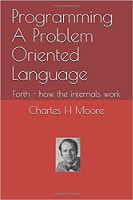 In this year, 2018, we celebrate 50 Years of Forth. How do you define a computer language? Charles Moore, the inventor of Forth, takes you through the different steps and as well through the reasoning behind it. This is an early book and with the 50 Years Of Forth, this eBook, available for 4 years, is now available as print book as well. It is part of the Forth Bookshelf at amazon, see https://www.amazon.co.uk/Juergen-Pintaske/e/B00N8HVEZM .
Das Taschenbuch ist auch bei Amazon.de wieder erhältlich.
mk
eForth 34.1 mit Tiny FlashTools ist da.
Tings eForth für den MSP430G2553, das 430eForth43, gibt es bekanntlich seit diesem Jahr mit ausdrücklicher Zustimmung von Ting auch als Version für den Naken Assembler von Micheal Kohn. eForth ist damit aus den Krallen solch aufgeblähter IDEs, wie dem des Code Composers Studio (CCS), befreit. Dieses eForth ist das minimalste komplette Forthsystem für diesen kleinen Chip.
mk
Moving Forth
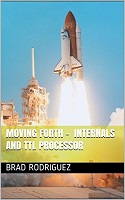 In diesem e-book hat Juergen Pintaske Beiträge von Brad Rodriguez zusammengefasst, die Brad 1993 für "The Computer Journal" verfasst hatte. Damit fügt er der Sammlung von Werken über Forth im Forthbookshelf eine weitere historische Schrift hinzu:
Direkt zum Buch: https://www.amazon.de/dp/B07BTV7QVR
Zur Forth Bookshelf: https://www.amazon.co.uk/Juergen-Pintaske/e/B00N8HVEZM
In diesem e-book hat Juergen Pintaske Beiträge von Brad Rodriguez zusammengefasst, die Brad 1993 für "The Computer Journal" verfasst hatte. Damit fügt er der Sammlung von Werken über Forth im Forthbookshelf eine weitere historische Schrift hinzu:
Direkt zum Buch: https://www.amazon.de/dp/B07BTV7QVR
Zur Forth Bookshelf: https://www.amazon.co.uk/Juergen-Pintaske/e/B00N8HVEZM
Juergen wrote: "In 2018 we have 50 Years of Forth. When I looked for a new project for an eBook I realized that one area is not very well covered: How do the Forth internals work? How can you build a Minimal Processor executing Forth directly? How do you write an Assembler in Forth? When I looked around for some documentation, I remembered this series of articles again. They seems to fit very well together. I contacted Brad and asked for permission to publish them as part of the Forth Bookshelf. He liked the idea so I started formatting. I did not change any of the original material.The only part I added was an appendix, where I redid some of the pictures, so I could understand them better. I have to thank Brad Rodriguez for the copyright to publish this documentation."
http://www.camelforth.com/news.php - Go, see it all!